Level 6
Counselling BA (Hons)
| Duration | Age Group | Study | Start | Cost | Available Locations |
|---|---|---|---|---|---|
| 3 YEARS | ADULT | FULL TIME |
15/09/2026 |
£9,535 per year * | Southend Campus |
| Duration | Age Group | Study | Start | Cost | Available Locations |
|---|---|---|---|---|---|
| 3 YEARS | ADULT | FULL TIME |
15/09/2026 |
£9,535 per year * | Southend Campus |
Share On
Overview
UCAS Course Code: B942
This course is validated by the University of East Anglia (UEA)
This course will develop your personal and professional integrity as a counsellor whilst promoting sound ethical practice.
Why study this degree at University Centre South Essex?
- You will build a broad theoretical knowledge and practical skills toolbox upon a firm person-centred foundation
- You will look at all aspects of psychotherapy (not all degree courses offer this)
- You will be equipped with real-time experiences (what is going on current practices)
- Industry-led modules to meet current practice requirements
The BA (Hons) Counselling offers you a strong theoretical and practical base from which to begin your professional counselling practice whilst work- ing towards individual accreditation with the BACP. The theoretical orientation is humanistic though other approaches such as Cognitive Behavioural Therapy and Transactional Analysis are also examined.
You will be encouraged to respect the frame and ethos of their core training approach whilst also developing your own individual style and philosophy of counselling. The programme is hence intended for those seeking a career in counselling either in an environment which utilizes counselling or one which encompasses the emotional and psychological well-being of others.
The programme is underpinned by three key strands of theory skills and employability/personal development. The strands run concurrently across each level of the programme with theory and skills modules being particularly closely aligned so as to enable you to develop and enhance your counselling practice utilising your increasing knowledge and understanding of the core philosophy and theoretical underpinnings of the person-cen- tred and existential models of therapy.
Work placements (practice learning) form an essential part of the Counselling degree. You are required to undertake 30 hours of personal therapy which will begin during the first year and in Years two and three to complete a minimum of 100 hours of counselling practice with a range of actual clients.
Experienced tutors will support you throughout from gaining introductory counselling skills with peers to undertaking professional counsel- ling practice with clients. Successful completion of the degree will enable you to practice as counsellors in a range of settings such as counselling agencies charitable organisations hospices private healthcare and student support services in schools colleges and universities. You may also work as independent professional therapists.
There is a dedicated Practice Learning team to support students with finding and completing placements.
Entry Requirements
A Minimum of 64 UCAS Points from one or more of the following:
- At least two A-levels
- BTEC Level 3 Extended Diploma/Diploma/Subsidiary Diploma/Certificate
- BTEC National Award/Certificate/Diploma
- International Baccalaureate
- Access to Higher Education Diploma (minimum 15 credits at Merit or above)
- Ideally, you will have achieved GCSE English and Maths at Grade 4 or above/equivalent. However, if you do not meet the stated entry requirements, please contact our Admissions Team, who will be happy to discuss your individual circumstances and available options. Or a Level 2 equivalent such as Functional Skills.
For any qualification not identified above the HE Admission Team will determine equivalences through UKNARIC.
Exceptional Entry
Applicants wishing to be considered for entry to the second or third year of study or wishing to import credits or evidence of prior learning into the course for which they are applying will be considered in accordance with the awarding bodies policy on Accreditation of Prior (Experiential) Learning.
Applications from mature students who do not possess the entry requirements as listed above but who possess related professional experience or professional qualifications are welcome to apply. You will need to demonstrate by interview exceptional entry portfolio (this is likely to include evidence of paid or unpaid work experience) and/or written assessment that you are suitable for the course. In the first instance we suggest you contact HEAdmissions@southessex.ac.uk to discuss your application.
DBS (Disclosure and Barring Service)
Students on this course are required to undertake an enhanced Disclosure and Barring Service (DBS) check as part of the programme requirements. The cost of the DBS check is payable by the student. The cost of this is currently £49.50.
Further information about the process, including how and when to apply, will be provided by the University.
Important:
Disclosure and Barring checks cannot be carried out for applicants who are not or have never been resident in the UK. Applicants who reside or previously have resided overseas will be required to provide a criminal record check or certificate of good conduct from their country or countries of residence prior to entry on to the course.
Course Structure
Year one modules (Level 4)
- Introductory Counselling Skills Ethics and Law
- Existential and Person-Centred Therapy
- Counselling in a Contemporary Context: Working Therapeutically with Identity Difference and Diversity (1)
- Critical Psychopathology
- Developing Counselling Skills (incorporating FTP1)
- Counselling Children and Young People
Year two modules (Level 5)
- Integrative Practice (incorporating FTP2)
- Comparative Approaches in Counselling
- Counselling in a Contemporary Context: Working Therapeutically with Identity Difference and Diversity (2)
- Loss and Attachment
- Introduction to Research
Year three modules (Level 6)
- Consolidating Creative Techniques (incorporating FTP3)
- Philosophical Issues in Counselling
- Addiction and Substances
- Dissertation
- Personal and Professional Relationship
Work placements
Minimum of 100 Hours Voluntary Placement Counselling in an approved Counselling Agency Mandatory requirement. In year two there is a require- ment for 25 to 50 hours to be completed subject to successful completion of the Fitness To Practice module in Year one. A further 75 hours are re- quired in Year three these numbers ensure that successful graduates will be well positioned to achieve full membership of an appropriate regulatory body such as BACP or NCS.
Personal therapy
You are also required to undertake 30 hours of personal therapy during the programme with a minimum of 10 hours of personal therapy to be com- pleted during the first year prior to starting placement in year 2. You will be required to become student members of The BACP (British Association of Counselling & Psychotherapy) and to maintain personal indemnity insurance in line with industry requirements.
Teaching & Learning
Contact hours: 13 hours per week over two days. Plus Independent study (suggested 30 hours per week).
You are taught through a combination of lectures seminars and workshops which enable you to discuss and develop your understanding of the disciplines of Counselling and all professional aspects pertaining to the counselling industry.
A range of appropriate facilities including the library and online learning resources the Learning Resource Centre and the Forum supports your independent learning.
Assessment & Feedback
You will receive on-going feedback as part of your one-to-one sessions with your unit teachers. You will also receive summative feedback on all formal assessments undertaken by coursework. Feedback is intended to help you learn and you are encouraged to discuss it with your unit leader. Feedback can be given in a range of different ways in order to accommodate a variety of learning styles and aptitudes including group critiques, recorded verbal feedback and written feedback.
Feedback on the Final Major Project/Dissertation module in Year three is provided throughout and through supervision meetings as scheduled.
Course Cost
Adult,
full_time:
£9,535 per year
Fees are per academic year for Home/UK students.
The following course-related costs are included in the fees:
- A sum towards clinical supervision. A sum towards appropriate personal indemnity insurance. A sum towards required membership of an industry regulatory body
- You will receive an allocation of pages for printing. Once you have used your allocation, you need to charge up your account with more pages
- Initial DBS check
Additional Professional Requirements and Costs
Students studying counselling are required to obtain membership of the British Association for Counselling and Psychotherapy (BACP) and to hold appropriate professional indemnity insurance. The associated costs vary and are payable by the student; further guidance is available from the course team.
Students on the BA (Hons) Counselling programme must also complete a minimum of 30 hours of personal therapy across the duration of the course (10 hours per academic year). Students are responsible for meeting the full cost of this requirement. Costs are in the region of £40 per hour.
In addition, counselling students are required to engage in regular counselling supervision. The cost of supervision is payable by the student and typically ranges from approximately £50 to £80 per session.
Students on the BA (Hons) Counselling programme receive an annual £500 bursary towards these costs.
What Next...
Students can progress onto postgraduate programmes including:
- MA Counselling
- MA Psychotherapy and Counselling
- MSc Therapeutic Counselling
- MSc Counselling Children and Young People
- MSc Psychology
- MSc Psychological Research Graduate destinations
When you have graduated you will be able to pursue a number of different career options including:
- Counsellors in a variety of settings including schools, charitable organisations, Women’s Refuges, mental health agencies
- teaching
The majority of students have gained full-time employment following graduation.
Success Stories...
Starting college was daunting at first. From my very first interview, I felt safe, supported and encouraged, while still being treated professionally and with respect.
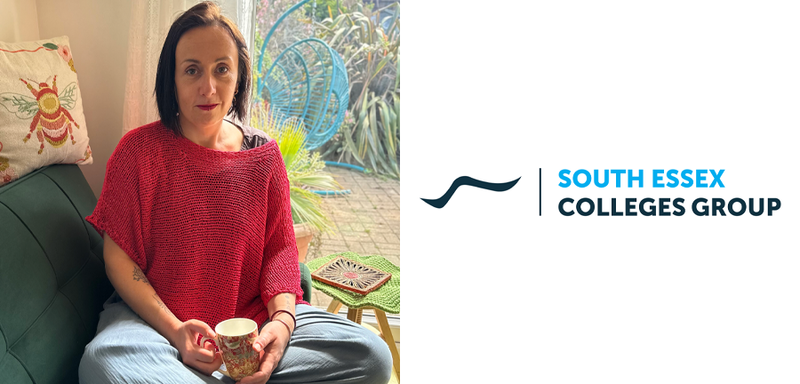
My name is Gosia Grabowska, and I studied Level 3 Certificate Counselling Studies, Level 4 Diploma Therapeutic Counselling, and Level 5 Diploma Psychotherapeutic Counselling at South Essex Colleges Group. This is my story.
Originally from Poland, I came to the UK over 20 years ago with a simple plan: learn English and return home to use it in my future career. However, life had other ideas. I met my partner here, settled down, and built my family.
Before discovering counselling, I worked across a range of roles, including in retail, hospitality, and as a GP receptionist. After having my second child, I knew I wanted more from my career when I returned from maternity leave, something that offered not only financial stability but also real purpose and fulfilment.
Becoming a therapist had always been my dream. As a birthday present, I asked my partner to fund my Level 1 introductory counselling course. Those first eight weeks changed everything. I felt an incredible sense of pride and achievement, and it inspired me to continue progressing through Level 2, Level 3 and beyond.
Starting college was daunting at first. From my very first interview, I felt safe, supported and encouraged, while still being treated professionally and with respect. That strong sense of trust stayed with me throughout my studies. What I enjoyed most about the course was the human connection. Counselling training isn’t just about theory, it fundamentally changes the way you understand yourself and others.
I was fortunate to learn from many tutors, each bringing something unique to my experience. One moment stands out in particular. During the early stages of the COVID pandemic, I became very unwell while studying the Level 4 course and believed I would have to leave the course. I met with my tutor, Zoe Viscardini and she supported and encouraged me, helping me believe I could continue. Looking back, I know that if I had walked away at that point, I would not be where I am today. Her belief in me made all the difference.
Throughout my studies, I developed essential skills including communication, self-awareness, reflective practice and emotional resilience. I also learned the importance of professionalism, boundaries, collaboration and lifelong learning, skills that continue to shape both my career and personal life.
One of my proudest moments was completing the Level 4 course and qualifying as a counsellor. It had been a challenging journey, with moments where I doubted myself. Finishing felt like receiving a driving licence, you’ve learned the skills, and now it’s time to go out into the world and use them. It remains one of the proudest achievements of my life.
Since qualifying, I’ve built a varied and rewarding career in counselling and mental health services. I began as a mentor at the organisation where I completed my placement and have since progressed to become a Clinical Manager for counselling placements within a local charity, a Clinical Supervisor and a private practitioner.
Alongside this, I’ve qualified as a tutor and now teach within counselling training organisations. I also work as a marker for a trauma academy, am a qualified EMDR therapist, and deliver workshops for social work students focusing on therapeutic communication and relational skills.
If there’s one piece of advice that has stayed with me, it’s the importance of collaboration. Counselling is not a profession you can do in isolation, you need connection, shared learning and support from others. That mindset has shaped my journey and continues to guide my career today.
Take a look at our range of counselling courses starting September

As a neurodivergent student, having smaller groups was really beneficial for me. I felt very supported and I feel like this has set me up for such an amazing career ahead

Meet Jade Jackson-Byrne. Following her journey through Level 2 and Level 3 studies at South Essex Colleges Group, Jade has successfully completed her BA (Hons) Counselling degree at University Centre South Essex (part of South Essex Colleges Group). Her experience is a powerful example of resilience, self-belief, and the impact of supportive education.
A Supportive and Inclusive Environment
Jade found University Centre South Essex to be a place where she could truly thrive. She particularly valued the smaller class sizes and inclusive learning environment:
“As a neurodivergent student, having smaller groups was really beneficial for me. I felt very supported and I feel like this has set me up for such an amazing career ahead.”
Jade explained that her decision to progress onto a degree at University Centre South Essex was an easy one:
“The choice to progress to a degree here was based on the incredible support I received while studying my Level 2 and Level 3 courses. Knowing that support would continue throughout my transition to degree level study, it just felt right and comfortable to progress.”
She also highlighted how important the environment was in helping her take the next step:
“I felt supported as a single person, as a single mother and as a mature student to take on this challenge, being local was important too.”
Overcoming Challenges
During her first year, Jade received a diagnosis of dyslexia, something that became a turning point in her academic journey:
“In my first year I received a diagnosis of dyslexia. Getting the support to get diagnosed was such a game changer. The support throughout enabled me to get a dyslexic tutor, get more support and just embrace a different way of learning.”
With the right support in place, Jade gained confidence and embraced her identity:
“It allowed me to feel brave enough to expose my disability, which was hidden, but now I feel like it is part of my superpower.”
A Moment of Pride
Completing her degree is an achievement Jade once felt was out of reach:
“I was a person who never believed that I’d even have a degree. I really believed in my younger self that there was a stereotype and I felt I fell into that stereotype. But I took on the challenge. I came from a deprived area. I believed in myself. So just completing the degree feels absolutely amazing.”
Looking Ahead
Jade is already taking the next step in her career. She is the founder of ‘Inner Courage’, a counselling and wellbeing service, which she hopes to officially launch in October 2026. Her ambitions include expanding the service to offer workshops and listening support.
‘Inner Courage’ didn’t emerge from a simple desire for entrepreneurship; it grew from what she describes as "the ashes of merging with her Jungian shadow." For Jade, the degree was more than a qualification, it was a period of intense self-discovery. Coming from a blended family and navigating the world as a neurodivergent individual, she rarely felt she fitted into a "solid, concrete narrative”.
Jade’s journey highlights what can be achieved with determination, self-belief and the right support. Her story is an inspiration to others considering their own path into higher education and beyond.
If Jade’s story has piqued your interest? Check out counselling courses starting this September.