

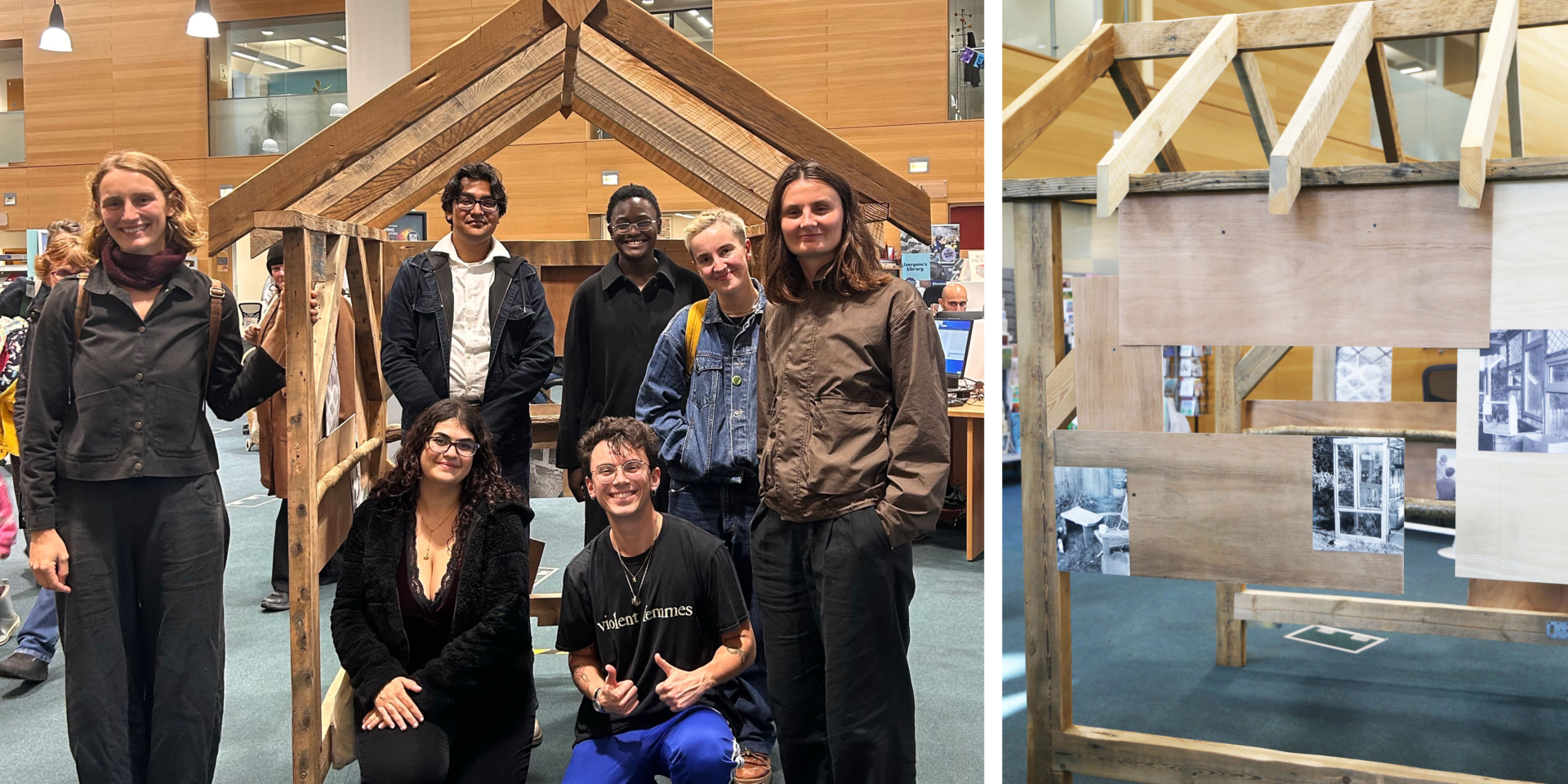
University Centre South Essex Associate Lecturer Kairo Urovi is bringing professional practice into the classroom, following their work as a facilitator on Where We Meet, an exhibition presented by Photoworks in collaboration with artist Eva Jonas and two groups of young queer people in Sussex.
Showcasing the power of collaboration, creativity and shared experience, Where We Meet explores what can happen when people come together to make, learn and create. The exhibition features photographs capturing moments of engagement with tools, timber and one another, made during a workshop with queer-led carpentry organisation In Our Hands.
For Kairo, who teaches on the BA (Hons) Photography course at University Centre South Essex, being part of the project represents a significant milestone in their artistic practice, as well as an opportunity to bring new perspectives and industry experience into their teaching.
“Photoworks has existed as an organisation for over 30 years, so it is an incredible achievement to have worked as a facilitator alongside Eva Jonas and to see the participants’ work come alive during the festival,” Kairo explains.
“Working freelance alongside teaching can sometimes be difficult to juggle, so having a show that recognises my work and opens up wider conversations around the subject is really important to me.”
Connecting professional practice with the classroom
Kairo’s artistic practice and teaching are closely intertwined. Their approach encourages students to question established ideas about photography, explore collaborative ways of working and develop the confidence to challenge the rules they have been taught.
“Whether you are working in a workshop or on a commercial set, there is usually a whole team of people working together to make a photograph happen. Collaboration is imperative. You need to remain curious, work with others and learn how to break the rules.”
For Kairo, learning from lecturers who remain active in the creative industries offers students invaluable insight into the realities of building a career in photography. From finding assisting opportunities to setting freelance rates, understanding the practicalities of working in the industry can make a real difference.
“Sometimes this insider knowledge can be gatekept in the creative industries. I think transparency is key. It is important to help each other, and having had to learn some things the hard way myself, I would not want my students to go through the same struggles.”
By maintaining an active creative practice, Kairo hopes to show students that opportunities such as exhibitions, talks and book launches are within their reach, too. Their experience demonstrates how professional ambitions can develop through commitment, collaboration and a willingness to keep creating.
“Where We Meet is the final outcome of a year-long programme and countless hours of working, planning, thinking, making, editing and producing. I always tell my students that time will pass anyway. We might as well get on with it now.”
Making space for creativity
Alongside the work itself, Kairo is passionate about how photography is presented and shared. They encourage students to think beyond traditional gallery spaces and institutional recognition, finding creative ways to bring their work to an audience.
“The presentation of the work is just as important as the work itself. You do not need an official gallery or institution to recognise you. You can put on a group show with your friends in your bedroom or kitchen if you really want to. The more playful you are, the easier it will feel.”
This open and experimental approach reflects Kairo’s wider teaching philosophy: creativity thrives when students feel encouraged to take risks, collaborate with others and explore opportunities beyond conventional routes into the industry.
Looking ahead
Kairo’s commitment to developing their own practice continues alongside their work with students. Having started a Postgraduate Certificate in Education (PgCE) in September, they are looking forward to exploring different approaches to teaching and applying their learning in the classroom.
They have also recently been awarded a scholarship to join The Photographic Condition, a year-long programme at the Athens Photo Research Center. The programme will offer opportunities to attend workshops with internationally renowned artists, photographers and curators, while developing new projects and ideas alongside fellow creatives.
For Kairo, these experiences are not separate from teaching; they are an essential part of it. By continuing to learn, experiment and participate in the creative industries, they can bring fresh perspectives and real-world opportunities back to their students.
Their message to aspiring photographers is simple: stay curious, embrace collaboration and do not wait for permission to make something happen.