Level 6
Interior Design BA (Hons)
| Duration | Age Group | Study | Start | Cost | Available Locations |
|---|---|---|---|---|---|
| 3 YEARS | ADULT | FULL TIME |
18/09/2024 |
£8000 per year * | Southend Campus |
| Duration | Age Group | Study | Start | Cost | Available Locations |
|---|---|---|---|---|---|
| 3 YEARS | ADULT | FULL TIME |
18/09/2024 |
£8000 per year * | Southend Campus |
Share On
If you require any support with your UCAS application, please contact the HE Admissions team headmissions@southessex.ac.uk
Overview
Course code: W250
This course offers strong industry links with a programme of exciting ‘live’ projects and opportunities for work placements which often result in job offers at the end of the programme.
Why study this degree at University Centre South Essex?
- Professional Interior designers to act as a year mentors
The programme has a strong industry focus providing the students with an educational and industry experience. One of the main distinctive features for the programme is working with local, London and international design companies to support your academic studies
- Interior Design competition projects and additional design work opportunities
You will have the opportunity to take part in additional design work opportunities alongside the programme to help boost your design and academic experience which could result in a greater chance of successful employability.
- Skills-based certificate
The programme delivers sessions on industry software such as AutoCAD
- Partnership with Creative Recruitment agencies
By working with a London-based creative recruitment agency RGB Network in years 2 and 3 you will be exposed to specialists who connect designers to employers
- Personalised career advice tutorials
You will be provided with 1 x 20 minute career’s advice tutorial per semester.
Interior design is an extremely exciting and rewarding career and there are a huge range of career opportunities within the industry. From year one of the course you will be introduced to industry CAD software and industry processes which will include using Photoshop, sketch up, AutoCAD, InDesign, working on live projects, undertaking work experience opportunities and taking part in interesting visits to design studios, exhibitions and educational workshops.
You will be able to explore these job opportunities and find your place within the industry whilst working on projects of your own choice. The course covers a range of interior design such as residential, hospitality design and commercial interiors.
By joining the course, you will become part of our interiors team, which is a unique and supportive learning environment. We have a maximum of 20 student places available per year group, which allows more contact time with all students. Our course team are industry professionals who practise as freelance interior designers, which provides extensive industry involvement to the course with additional opportunities for you to work on live industry projects alongside the course. Each year on the programme you will have access to an industry mentor, over the 3 years this will include a local, national and international interior designer that will provide workshops and 121 tutorials.
Entry Requirements
You will need a minimum of 64 UCAS points from one or more of the following:
- A Levels
- T Levels
- BTEC/UAL Extended Diploma
- Foundation Diploma in Art and Design (Level 3 or 4)
- Or equivalent EU/International qualifications, such as International Baccalaureate Diploma
- And English GCSE passes at grade 4 or above (grade A*-C)
This list is not exhaustive, other qualifications may be considered. Entry to this course will also be determined by the quality of your application, looking primarily at your portfolio/showreel of work,
personal statement and reference.
Exceptional Entry
Applications from mature students who do not possess the entry requirements as listed above, but who possess related professional experience or professional qualifications are welcome to apply.

Course Structure
Contact hours
13 hours per week, comprising:
- Four times three-hour sessions of practical activities and theory
- One-hour tutorial
Units:
Year 1:
- Design Skills Acquisition
- Visual and Cultural Contexts
- Design Exploration
- Design Application
Year 2:
- Design Intervention
- Personal Promotion & Work Placement
- Interior Conversion
- Cultural Context & Dissertation Proposal
Year 3:
- Dissertation
- Final Major Project
- Industry Practice
- Design Presentation
Dissertation
This unit allows for the opportunity to develop a critical awareness, in-depth research, and to form a sustainable argument for an area of investigation. You will negotiate with a supervisor, a line of enquiry that is relevant to your chosen field of study and undertake an avenue of research that could, but is not limited to, interior design.
Subject Realisation
The aim of this unit is to identify a subject of personal significance and a working process that has the potential for sustained investigation. You will review and examine work produced in year two of the programme and address your choice of media and working process through discussion and exploration of alternative practices and media. By establishing a critical statement of intent, you will form an intellectual and creative foundation for their final major project. As well as presenting a feasibility report and statement of intent, you will, in the design development stage, use architectural models as a simulation vehicle to provide an advanced view of what a building or interior will look like when it is constructed. Modelling provides security of knowledge, for validation of intent, for consensual agreement, for the purposes of refining details and ideas and for deeper speculation and contemplation.
Professional Promotion
This unit is primarily concerned with the professional relationships between members of multi-disciplinary teams e.g. colleagues, clients, contractors, users and the community at large. It explores the work of design-makers, freelance designers, design consultants and in-house designers and the standards and frameworks of practice for each of these modes of employment. You will also have to consider the importance and impact of your End of Year Show, establish the exhibition space, prepare and install your work for exhibition, explain and evaluate the exhibited work and make an effective contribution to the management of the exhibition process.
Work placements
Work placements are encouraged throughout the duration of the course. However there is particular emphasis on this aspect during year two in relation to the Work Placement unit. On this unit you will work towards securing a work placement either locally or nationally* for 60 hours over the year. Some students take this in one block others over a number of weeks, both in term time and during the holiday period; this is usually negotiated with the placement provider. You will be assisted in gaining a placement, however the emphasis is on you to secure it as part of this Unit. Should you not be able to secure a placement a suitable live or competition brief may be taken on to fulfil the requirements of the Unit. This live brief will be negotiated with your Unit Leader.
Timetables
Timetables are normally available one month before registration, though we endeavour to let you know an outline as soon as possible. Please note that while we make every effort to ensure that timetables are as student-friendly as possible, scheduled teaching can take place on any day of the week. Typically year groups are expected to attend for 13 hours a week spread over two and a half days. We expect you to build on this learning through Independent Study for at least a similar period. For this time we usually have space available within the campus or at the Forum in Southend.
Live projects and industry involvement
We promote industry awareness as much as possible on the course to enable students to be completely prepared for starting their career in the industry. Live projects are organised to allow students to practise and learn how to become a professional interior designer and work through the industry process of designing. We work with industry suppliers on all projects and visit current design exhibitions to ensure the currency of the programme. Live projects often result in students work being chosen to take forward to the next stage and eventually is turned into a reality.
Trips
Students benefit from a wide range of trips including:
- Exhibitions in London
- Visits to design studios in London
- Presentations on job roles and projects, including Chelsea Harbour Design Centre
- Design workshops
Contact hours
The course is timetabled for 13 hours per week, which includes an hour tutorial. Independent study is expected outside timetabled hours to work on projects set and is a full time course.
Industry Links
- G1 Architecture
- Howden Kitchens
- Fiducia interiors, London
Teaching & Learning
Teaching and Learning
You are taught through a combination of lectures, seminars and workshops, which enable you to discuss and develop your understanding of the discipline of Interior Design. You will use industry-standard programs and have access to various facilities including the 3D, Fashion, Printmaking & Photography studio. You also have access to hardware such as the laser & vinyl cutters, 3D Printer and scanners.
At Level 4 you typically have around 13 hours contact time per week, typically consisting of:
- Four hours of lectures/seminars
- Six hours of workshops (including dedicated one-to-one tutorials when necessary)
- Two hours of Contextual Studies (either lecture or one-to-one tutorial)
- One hour group tutorials
Units are delivered through a variety of methods of teaching and learning. These will include:
- Technical demonstrations - designed to provide essential inductions for interior design tasks and resources to support the acquisition of essential skills
- Small group teaching - studio based group sessions which are led by a tutor
- Group critiques - will usually occur towards the end of a unit before assessment
- Individual tutorials - The tutor will ask key questions regarding your project and offer advice and suggestions regarding future development
- Independent research and studio practice - during the unit students are expected to follow up on suggested directions regarding project direction
Independent learning
When not attending lectures, seminars and workshops or other timetabled sessions you will be expected to continue learning independently through self-study. Typically, this will involve reading journal articles and books, working on individual and group projects, undertaking research in the library, preparing coursework assignments and presentations. A range of excellent facilities, including the library, the Learning Resource Centre and the Forum, supports your independent learning.
Assessment & Feedback
Assessment
All assessment on BA (Hons) Interior Design is via coursework; there are no exams. Coursework is assessed in a range of different ways in order to accommodate a variety of learning styles.
With progression in mind, students work in a ‘studio environment’ and are assessed on their design ability in line with industry practice. The curriculum and the assessment is designed to prepare students for the workplace. The introduction of group critiques, time management and planning, group and individual assessment, presentation techniques etc, all form part of this strategy.
Design skills are assessed through submissions, individual and group work, individual critical analyses, portfolios, presentations and exhibition of final outcomes.
Students are assessed on their knowledge base and understanding of key concepts, theories and theoretical frameworks in a variety of ways. For example: essays, reports, case studies, classroom contributions, seminar discussions and presentations.
Feedback
You will receive formative feedback as part of your one-to-one sessions with your unit teachers. You will also receive summative feedback on all formal assessments undertaken by coursework. Feedback is intended to help you learn and you are encouraged to discuss it with your unit leader tutor. Feedback can be given in a range of different ways in order to accommodate a variety of learning styles and aptitudes including group critiques, recorded verbal feedback and written feedback.
We aim to provide you with feedback within 20 working days of hand-in (for al formal studio based coursework assessment). For the third year Dissertation Unit you will receive feedback and grades at the same time as your Final Creative Output Unit.
Course Cost
Adult,
full_time:
£8000 per year
Fees are per academic year for Home/UK students.
The following course-related costs are included in the fees:
- Guest speakers, visiting lecturers and industry focussed workshops will be included in your course over the three years.
- Third Year students will have the opportunity to showcase their final year work at the end of their studies. This may be a local, national or online platform. Event/exhibition costs will be covered by the Faculty of HE. In the past this has included New Designers. Students will be responsible for any additional costs associated with the production of their personal project (ie: printing, materials).
- Annual £20 of printing credit per year.
Additional course costs can be found here
What Next...
You can progress to postgraduate study including:
- MA Interior Design
- MA Interior and Spatial Design
- MA Architectural Interior Design
Graduate destinations
The great majority of students progress into industry following graduation, including:
- Junior designers progressing to midweight designers in a range of industries including residential, retail and leisure
- Prestigious international design companies
Success Stories...

I would have never imagined in four years’ time that I would have met my business partner and be setting up our own company, both doing something we truly love.

My name is Emma White, I am 30 years of age, studying BA Hons Interior Design at University Centre South Essex and this is my story.
It was the start of 2017 and I wasn’t enjoying my current job working in HR and had just started writing a blog about home styling and design. Interior design has always been something I’ve enjoyed and found interesting so I finally took the plunge that year to quit my job and go back to studying full-time.
I started looking online at interior design courses locally and found the degree through there. But as I hadn’t studied art in the past, I wanted to start by trying the Access to HE Art & Design course (which I found through the website) to see if I enjoyed it before committing to the degree. Turns out I did!
I have really enjoyed the course so far and the briefs are flexible so they allow you to be as creative as you want. It also links well to the interior design industry so the work we do feels really relevant.
After I finish my degree, me and another student on the course are currently setting up our own interior design business so we will have our own company when we finish in May.
During lockdown I sometimes found it hard to feel inspired with an idea for a design, as the days have blurred into one. But I’ve found actually spending some time away from work really helps this rather than staring at a blank screen all day.
The advice I would give to anyone looking to start their degree journey is to just go for it as you never know where it might lead you. I would have never imagined in four years’ time that I would have met my business partner and be setting up our own company, both doing something we truly love.
To learn more about the University Centre and what we have to offer, visit: www.southessex.ac.uk/he

Teri Athery's story on work experience journey with Essex interior design company
Course studied
I enjoy that my course is run by tutors that have real life industry experience.

Hello my name is Teri Arthey, I am a third year student studying the BA(HONS) Interior Design course at University Centre South Essex and this is my work experience story at Design Coalition.
My tutor organised the opportunity for a professional mentor, to come in four times a year and present career tips, knowledge and insights and the opportunity to go through our own project ideas and get feedback. Last year sadly due to the pandemic it had to be on teams. After our mentor did the first session with us presenting what he and the company do, I couldn’t stop thinking about it and kept looking into the company. In our last session right before we left in year 2 we did one-to-one sessions with him and I asked him if I could possibly get some experience in the summer. He asked me to send my cv and portfolio and he’d get back to me. A couple weeks later I was in the studio working.
I enjoyed everything about my work placement at Design Coalition. I worked within a team that were always so helpful and kind, was given a wide range of opportunities and gained knowledge that I can bring back to university and into the future. I have also gained more confidence and communicational skills. It has cemented the idea that I want to become an interior designer in the future.
The work experience placement ran for 16 weeks all together and thanks to the course, this has enabled me to have a CV and portfolio ready to send when I graduate. If it wasn’t for having my teacher set up the mentor meetings I might have not have had the opportunity.
I enjoy that my course is run by tutors that have real life industry experience. I also really like the small class numbers as this means we have a lot more time with our tutors. We also have access to resources and staff that can help us with other things. There’s always someone you can ask.
I would highly recommend the university; all the staff are amazing and helpful along with amazing facilities. I came from doing the BTEC level 3 extended diploma in 3D art and design at the college which meant it was a nice smooth transition and got me ready for the course.
My career aspiration is to be a successful interior designer and my everyday aspiration is to be happy.
Find out more about the Interior Design course by visiting: Interior Design BA (Hons) | South Essex College
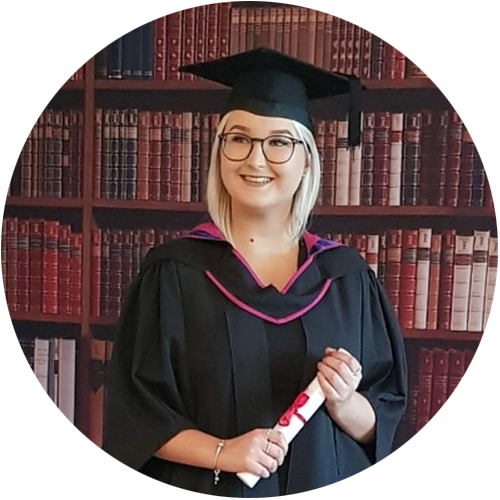
From a practical view it is more cost effective to study here as the fees are lower and also travel & accommodation is cheaper whilst still gaining the same degree, knowledge and experience.

My name is Daisy Whittaker, I am 23 years old, I studied Interior Design at University Centre South Essex from 2016 - 2019 and this is my story.
I studied 3D Design at South Essex College and was awarded a Distinction* and from this went on to study on the BA Hons Interior Design degree and graduated with a 1st Class Honours Degree.
Since completing the course I went on to a junior designer role for Kelly Hoppen Interiors. I did this for a year before being made redundant during the pandemic. I have since gone on to set up my own interior design company and have completed projects across the south and east of England.
My job involves a whole array of tasks. As a business owner I not only design for clients, liaise with them and present to them, I also market my business, deal with finances and fellow business owners.
I chose to study here because the course was accredited by University of the Arts London which is a prestigious design school. I was also familiar with the lecturer (having been taught by her briefly on my college degree) and was confident in the level of skill I would be learning from her.
From a practical view it is more cost effective than going to university in London (UAL) as the fees are less being outside of the capital and also travel & accommodation is cheaper whilst still gaining the same degree, knowledge and experience.
It helped me prepare for the workplace because we did a lot of work experience which was invaluable. This helped me forge strong connections and industry links as well as gaining real life experience.
The software that we used is exactly the same as that in industry which is great. The suppliers that we met with and furniture brands are also the same so having some of that knowledge proved really valuable in interviews. My degree has also prepared me with general knowledge about the running of the industry, day-to-day life in the workplace, presentation skills, knowledge on suppliers, how to deal with clients and how to market yourself.
Setting up my own company and organically gaining over six projects in my first six months has been fantastic and in the future, I would like to have jobs booked in up to a year in advance as well as having more overseas projects.
People are always really impressed that you have studied to a higher degree especially having been awarded a 1st Class honours degree. The experience and knowledge I gained were excellent and I would not be able to run my business without them.
Hearing my name being called at graduation and everyone applauding my 1st class degree was certainly one of the highlights of my university journey. My time at the college and the university centre helped me to grow my confidence and speak in front of others which is an essential tool for running my business.
If you require any support with your UCAS application, please contact the HE Admissions team headmissions@southessex.ac.uk

View our latest
Prospectus

Pay Us a Visit On One of Our
Events
Why Not Share This On